
The word body has several meanings in English. It can refer to a person’s physical form, an animal’s structure, a collection of people, or the main part of a written work. It can also describe the substance, fullness, or strength of something, such as a wine or a paragraph.
Choosing the right alternative depends on what you want to describe. For example, physique refers to a person’s physical build, while figure often describes a person’s overall shape. In writing, main section may replace body when referring to the central part of a document. This guide explains more than 33 alternatives, shows their differences, and helps you choose words that sound natural in academic, professional, and everyday English.
Quick Answer: What Are the Best Synonyms for Body?
Common synonyms for body include physique, form, figure, build, torso, frame, structure, organism, anatomy, flesh, substance, mass, group, organization, and main section. Use physique for physical build, anatomy for body structure, organism for a living thing, and main section for written content. The best alternative depends on the sentence.
Quick List of Synonyms for Body
Here are useful alternatives grouped by meaning.
Physical Body and Appearance
- Physique
- Figure
- Build
- Frame
- Form
- Torso
- Flesh
- Anatomy
- Bodily structure
- Physical form
- Silhouette
- Stature
Biological and Scientific Contexts
- Organism
- Anatomy
- Physical structure
- Biological structure
- Tissue
- Frame
- Organ system
- Living being
Groups and Organizations
- Group
- Organization
- Association
- Committee
- Assembly
- Community
- Collective
- Institution
- Council
Writing, Objects, and Other Uses
- Main section
- Main text
- Core
- Substance
- Mass
- Bulk
- Structure
- Framework
- Content
- Volume
These alternatives are not interchangeable in every context. A person’s physique is different from a body’s anatomy, and a body of evidence refers to a collection of information rather than a physical form.
Formal Alternatives to Body
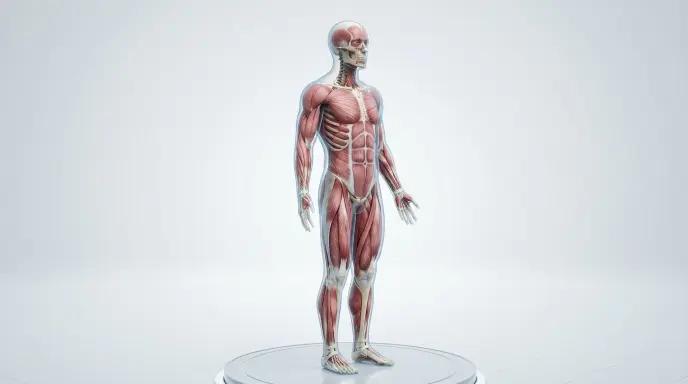
Formal alternatives are useful in academic writing, professional documents, medical discussions, and technical explanations. Choose the word that matches the specific meaning of body in your sentence.
1. Physique
Meaning: The overall physical build or appearance of a person.
Explanation: Physique is a close alternative when body refers to a person’s physical build. It does not describe the body in every biological sense.
Example: The athlete has a strong physique.
Best Use: Sports writing, fitness discussions, character descriptions, and general descriptions of physical build.
Worst Use: Avoid it when discussing internal organs or the main part of a document.
Tone: Neutral and descriptive.
2. Anatomy
Meaning: The structure of a living organism, especially its body and parts.
Explanation: Anatomy focuses on how body parts are arranged and connected. It is more specific than the general word body.
Example: The course introduces students to human anatomy.
Best Use: Medical education, biology, science articles, and health-related explanations.
Worst Use: Do not use it as a general synonym for someone’s appearance.
Tone: Scientific and formal.
3. Organism
Meaning: A living thing, such as a human, animal, or plant.
Explanation: Organism refers to the complete living entity, not just its physical body. It is appropriate in biological contexts.
Example: Each organism responds to changes in its environment.
Best Use: Biology, ecology, research, and scientific writing.
Worst Use: Avoid it when referring specifically to a person’s physical build or torso.
Tone: Scientific and precise.
4. Physical Structure
Meaning: The arrangement and organization of physical parts.
Explanation: This phrase describes how something is physically formed. It can refer to a human body, an animal, or a nonliving object.
Example: Researchers examined the physical structure of the specimen.
Best Use: Scientific explanations, technical reports, and educational content.
Worst Use: It may sound unnecessarily technical in casual conversation.
Tone: Formal and descriptive.
5. Framework
Meaning: A supporting structure or system that organizes something.
Explanation: Framework can replace body when the intended meaning involves an organized system or supporting structure. It does not usually refer to the entire human body.
Example: The report provides a framework for future research.
Best Use: Business documents, academic discussions, planning, and systems analysis.
Worst Use: Avoid it when you mean a person’s physical form.
Tone: Professional and analytical.
6. Structure
Meaning: The way parts are arranged to form a whole.
Explanation: Structure is a broad alternative when discussing the organization of a body, object, text, or system.
Example: The study examines the structure of the human body.
Best Use: Science, technical writing, academic work, and document analysis.
Worst Use: It may be too general when you need to identify a particular body part.
Tone: Neutral and formal.
7. Organization
Meaning: A group of people working together for a shared purpose.
Explanation: Organization can replace body in phrases such as governing body when the sentence refers to an organized institution or group. However, it may lose the original emphasis on authority or membership.
Example: The organization published its annual report.
Best Use: Business writing, nonprofit communication, and institutional descriptions.
Worst Use: Avoid it when the exact type of group, such as a committee or council, matters.
Tone: Professional and neutral.
8. Institution
Meaning: An established organization with a recognized purpose or role in society.
Explanation: Institution may work when body refers to an established public, educational, or professional organization. Not every group qualifies as an institution.
Example: The institution introduced a new research policy.
Best Use: Education, government, public policy, and formal organizational writing.
Worst Use: Do not use it for a temporary group or informal gathering unless the context supports the term.
Tone: Formal and authoritative.
9. Collective
Meaning: A group of people who act or work together.
Explanation: Collective emphasizes shared action or identity. It may replace body in some discussions of a group, but it does not automatically imply formal authority.
Example: The collective developed a plan for the community.
Best Use: Arts, community projects, cooperative work, and social discussions.
Worst Use: Avoid it when referring to a formal committee with defined powers.
Tone: Neutral and collaborative.
10. Assembly
Meaning: A group of people gathered for a meeting or shared purpose.
Explanation: Assembly is suitable when body describes people who gather to discuss, decide, or participate in an activity.
Example: The assembly discussed the proposed changes.
Best Use: Government, education, meetings, and formal gatherings.
Worst Use: It may be inaccurate when the group does not meet or assemble.
Tone: Formal and organized.
11. Association
Meaning: A group formed around a shared interest, profession, or purpose.
Explanation: Association can replace body when the original refers to a membership-based group. It does not necessarily imply decision-making authority.
Example: The association represents local business owners.
Best Use: Professional groups, clubs, trade organizations, and community work.
Worst Use: Avoid it when the group is actually a committee or government council.
Tone: Professional and neutral.
12. Substance
Meaning: The main content, material, or essential meaning of something.
Explanation: Substance may replace body in expressions such as body of work or body of an argument when the focus is on the content. It is not a synonym for physical body in ordinary usage.
Example: The substance of her argument remained clear.
Best Use: Essays, discussions, reports, and analytical writing.
Worst Use: Avoid it when you mean a physical structure or a specific organization.
Tone: Formal and thoughtful.
13. Corpus
Meaning: A collection of written or spoken material used for study or analysis.
Explanation: Corpus is a specialized term for a collection of texts or language data. It may relate to a body of literature or body of evidence, but it is not a universal replacement.
Example: The researcher analyzed a corpus of historical letters.
Best Use: Linguistics, literary research, and data-based language studies.
Worst Use: Avoid it when a general audience would find collection or body of work clearer.
Tone: Academic and technical.
14. Aggregate
Meaning: A whole formed by combining separate parts.
Explanation: Aggregate describes a combined total or collection. It can express the idea of a body of information or material, but it emphasizes the combined parts rather than the whole’s physical form.
Example: The report considers the aggregate results from all locations.
Best Use: Research, statistics, economics, and technical reports.
Worst Use: It sounds unnatural when describing a person’s body or appearance.
Tone: Technical and formal.
15. Bulk
Meaning: The main mass, size, or largest part of something.
Explanation: Bulk can describe the main portion of a physical object or quantity. It may overlap with body when emphasizing mass or size.
Example: The bulk of the material remained in storage.
Best Use: Logistics, manufacturing, technical descriptions, and everyday explanations of quantity.
Worst Use: Avoid it when you mean anatomy, a group of people, or written content.
Tone: Neutral and practical.
Semi-Formal and Neutral Alternatives
These words work well in everyday writing, school assignments, websites, emails, and professional communication. Their meanings depend on the subject being described.
16. Form
Meaning: The shape, appearance, or arrangement of something.
Explanation: Form is a flexible alternative when body refers to physical shape. It can also describe the arrangement of a written or artistic work.
Example: The sculpture takes the form of a human figure.
Best Use: Art, design, general descriptions, and educational writing.
Worst Use: It is too broad when you need to describe internal body parts.
Tone: Neutral and versatile.
17. Figure
Meaning: The shape or outline of a person’s body.
Explanation: Figure can replace body when discussing overall shape or silhouette. It does not describe every biological function or body part.
Example: The artist sketched a human figure.
Best Use: Art, character descriptions, and discussions of shape.
Worst Use: Avoid it when the context concerns anatomy or medical functions.
Tone: Neutral and descriptive.
18. Build
Meaning: A person’s general physical structure or size.
Explanation: Build refers to a person’s physical frame. It is a natural alternative when describing general physical characteristics, without requiring detailed measurements.
Example: The character is described as having a compact build.
Best Use: Character writing, general descriptions, and clothing-fit discussions.
Worst Use: Avoid it as a substitute for the biological meaning of body.
Tone: Everyday and descriptive.
19. Frame
Meaning: The basic physical structure of a person or object.
Explanation: Frame often refers to a person’s underlying physical structure. It can also describe a supporting structure in buildings or objects.
Example: The tailor adjusted the jacket to fit his frame.
Best Use: Clothing, physical descriptions, and structural explanations.
Worst Use: It is not a direct replacement when discussing a complete living organism.
Tone: Neutral.
20. Torso
Meaning: The central part of the human body, excluding the head and limbs.
Explanation: Torso is narrower than body. Use it when the sentence specifically refers to the chest, abdomen, and back region.
Example: The diagram labels the muscles of the torso.
Best Use: Anatomy, exercise education, drawing, and clothing descriptions.
Worst Use: Never use it when you mean the entire body.
Tone: Neutral and anatomical.
21. Flesh
Meaning: The soft tissue of a human or animal body.
Explanation: Flesh emphasizes the body’s soft tissue rather than the whole physical structure. It may carry literary or emotional associations.
Example: The poem explores the relationship between flesh and spirit.
Best Use: Literature, art, biology, and figurative expressions.
Worst Use: It may sound too graphic or dramatic for ordinary descriptions.
Tone: Context-dependent, from scientific to literary.
22. Silhouette
Meaning: The visible outline or shape of a person or object.
Explanation: Silhouette focuses on the outer outline rather than the entire body as a biological structure.
Example: The light revealed the silhouette of a dancer.
Best Use: Photography, fashion, art, and visual descriptions.
Worst Use: Avoid it when discussing organs, health, or physical functions.
Tone: Descriptive and artistic.
23. Stature
Meaning: A person’s height or, figuratively, their level of importance or reputation.
Explanation: Stature is not a complete synonym for body. It works when you mean physical height or, in another sense, social standing.
Example: The study recorded the stature of each participant.
Best Use: Scientific measurements, biographies, and formal writing.
Worst Use: Avoid it when discussing body shape or anatomy generally.
Tone: Formal and precise.
24. Mass
Meaning: The amount of matter in an object or the main body of material.
Explanation: Mass may describe a large physical quantity or a compact collection of material. It is not a natural replacement for a person’s body in every sentence.
Example: A large mass of ice covered the surface.
Best Use: Science, physics, and descriptions of material.
Worst Use: Avoid it when a more specific term, such as body, structure, or organism, is needed.
Tone: Scientific and neutral.
25. Core
Meaning: The central or most important part of something.
Explanation: Core can replace body when discussing the central content of a subject, argument, or document. In anatomy, it can also refer to the central muscles of the body.
Example: The core of the report explains the project’s findings.
Best Use: Writing, business reports, education, and exercise terminology.
Worst Use: It does not describe the entire physical body unless the context clearly supports that meaning.
Tone: Clear and practical.
26. Main Section
Meaning: The central part of a document or piece of writing.
Explanation: Main section can replace body when discussing the part of a document between the introduction and conclusion. It is a plain-language phrase rather than an exact synonym in every context.
Example: Use the main section to explain your evidence.
Best Use: Essays, reports, websites, instructions, and educational materials.
Worst Use: Avoid it when the established term body text is more precise.
Tone: Clear and instructional.
27. Main Text
Meaning: The principal written content of a document, excluding elements such as headings, footnotes, or appendices when relevant.
Explanation: Main text is useful when explaining document structure. The exact boundary depends on the type of document.
Example: Add the supporting details to the main text.
Best Use: Website editing, reports, academic writing, and publishing.
Worst Use: It is not a substitute for body when discussing physical anatomy or organizations.
Tone: Neutral and professional.
28. Content
Meaning: The information, ideas, or material contained in something.
Explanation: Content may replace body when the sentence focuses on the information in a document rather than its structure.
Example: The content of the article answers the reader’s main question.
Best Use: Websites, marketing, reports, and educational writing.
Worst Use: Avoid it when the physical structure or exact organization of a text matters.
Tone: Neutral and versatile.
Informal and Casual Alternatives

Casual alternatives depend on the meaning of body. English does not have one informal word that can replace it in every context.
29. Bod
Meaning: An informal word for a person’s body.
Example: The character is described as having a strong bod.
When it sounds natural: Casual speech, informal dialogue, or playful writing.
When to avoid it: Use body or physique in professional, academic, or medical writing.
Tone: Very informal.
30. Shape
Meaning: The general outline or physical form of a person or object.
Example: The coat keeps its shape after washing.
When it sounds natural: Everyday conversation about clothing, objects, or general form.
When to avoid it: It is not a complete substitute for the biological meaning of body.
Tone: Simple and neutral.
31. Bodily Form
Meaning: The physical shape or structure of a living being.
Example: The story describes the spirit taking bodily form.
When it sounds natural: General discussion, fiction, and reflective writing.
When to avoid it: It can sound unnecessarily formal in casual conversation.
Tone: Neutral to literary.
32. The Whole Person
Meaning: A person considered in terms of their complete identity rather than just their physical body.
Example: Good education should support the whole person.
When it sounds natural: Education, personal development, and discussions of well-being.
When to avoid it: It changes the meaning if you specifically mean physical anatomy.
Tone: Warm and inclusive.
33. Group
Meaning: Several people considered together.
Example: A group of volunteers helped clean the park.
When it sounds natural: Everyday conversation about people working or acting together.
When to avoid it: Use committee, council, or organization when the exact structure or authority matters.
Tone: Simple and conversational.
True Synonyms vs. Contextual Alternatives
The word body has several meanings, so some alternatives work only in specific situations.
| Type | What It Means | Can It Replace Body? |
|---|---|---|
| Close synonym | A word with a similar meaning in a particular context | Yes, when the meaning matches |
| Near synonym | A word that shares some meaning but adds a different detail | Sometimes |
| Contextual alternative | A phrase that works in one type of sentence | Only in that context |
| Broader expression | A word with a wider meaning | Sometimes, but it may lose detail |
| Narrower expression | A word describing one specific part or feature | Only when that specific meaning is intended |
For example, physique can replace body when describing someone’s physical build. Torso refers only to the central part of the body, so it cannot replace body in every sentence. Similarly, organization may work for a governing body, but it does not necessarily express the group’s formal authority.
Industry-Specific Usage
Business Writing
In business writing, body often appears in expressions such as body of evidence, body of work, or governing body. Choose a replacement based on the meaning.
Example: The report presents a collection of evidence supporting the recommendation.
Here, collection may work if the emphasis is on the evidence gathered.
Corporate Communication
For policies, announcements, and internal reports, organization, committee, council, or main text may be appropriate.
Example: The committee approved the updated policy.
Use the exact organizational term when membership, authority, or responsibilities matter.
Academic Writing
In academic work, body can refer to the human body, a body of research, a body of evidence, or the body of an essay.
Examples:
- The study examines human anatomy.
- The research draws on an existing body of evidence.
- The main section presents the findings.
Do not replace body of evidence with anatomy or physique. Those words describe different concepts.
Customer Service
Customer service writing benefits from clear, familiar language. If you are referring to the main part of a message or document, main section or main text may be easier to understand.
Example: Please include the details in the main section of the form.
Legal Writing
Legal documents may use body in terms such as governing body or body of law. These expressions can carry specific meanings.
Do not replace them casually with group, organization, or collection if the exact legal role matters. Keep the established wording or obtain qualified legal review when interpretation is important.
Email Communication
For professional emails, choose plain alternatives when they make your meaning clearer.
- Main text when referring to the content of an email.
- Committee when naming a decision-making group.
- Organization when referring to an institution.
- Structure when discussing how a document is arranged.
Email Examples Using Alternatives to Body
Email 1: Reviewing a Report
Subject: Suggested Changes to the Report
Hello Morgan,
The main section of the report is clear, but the supporting evidence could use a little more explanation.
Please add two examples before sending the final version.
Best,
Taylor
Email 2: Discussing a Committee Decision
Subject: Committee Meeting Update
Hello Team,
The committee reviewed the proposal and agreed to discuss the budget at the next meeting.
I will share the updated schedule once the date is confirmed.
Best,
Jordan
Email 3: Requesting Academic Feedback
Subject: Feedback on My Essay
Dear Professor Lee,
I have completed the main text of my essay and would appreciate your feedback on its structure.
Please let me know if the argument needs more supporting evidence.
Thank you,
Alex
Email 4: Sharing Research Findings
Subject: Research Summary
Hello Priya,
The study examines the anatomy of the sample and explains how its main structures work together.
I have attached the summary for your review.
Best,
Sam
Email 5: Updating a Website
Subject: Website Content Revision
Hi Chris,
I revised the content to make the main section easier to read. The new version uses shorter paragraphs and clearer headings.
Could you review it before publication?
Thanks,
Jamie
Short Dialogue Examples
Workplace Conversation
Person A: Which part of the report needs editing?
Person B: The main section. It needs more supporting details.
Classroom Discussion
Person A: What is the study of the body’s structure called?
Person B: Anatomy.
Customer Service Conversation
Person A: Where should I enter the explanation?
Person B: Please add it to the main text of the form.
Casual Conversation
Person A: How would you describe the character?
Person B: The story says the character has a broad frame.
Professional Discussion
Person A: Who approved the policy?
Person B: The governing committee reviewed and approved it.
How to Replace Body in a Sentence
Example 1: Physical Build
Original: The athlete has a strong body.
Alternative: The athlete has a strong physique.
Why it works: Physique focuses on overall physical build rather than the body as a whole biological system.
Example 2: Human Biology
Original: The body contains many connected systems.
Alternative: The human organism contains many connected systems.
Why it works: Organism refers to the complete living being. It sounds more scientific than body.
Example 3: A Specific Body Part
Original: The exercise strengthens the body.
Alternative: The exercise strengthens the core.
Why it works: This changes the meaning. Core refers to a central group of muscles, not the entire body.
Example 4: Essay Structure
Original: Explain your main argument in the body of the essay.
Alternative: Explain your main argument in the main section of the essay.
Why it works: Main section is a clear alternative for readers learning how essays are organized.
Example 5: A Group With Authority
Original: The governing body reviewed the proposal.
Alternative: The governing committee reviewed the proposal.
Why it works: Committee works if the group is actually a committee. Otherwise, keep governing body to avoid changing the meaning.
Example 6: Written Evidence
Original: The report considers a body of evidence.
Alternative: The report considers a collection of evidence.
Why it works: Collection emphasizes the evidence gathered. The phrase body of evidence may sound more established in formal analysis.
Example 7: An Artistic Description
Original: The artist drew the body.
Alternative: The artist drew the human figure.
Why it works: Human figure is natural in art and drawing contexts, although it can emphasize the visible form rather than anatomy.
Example 8: Document Editing
Original: The body of the email needs more detail.
Alternative: The main text of the email needs more detail.
Why it works: Main text clearly identifies the written content rather than the subject line or other email elements.
Comparison Table of Useful Alternatives
| Phrase | Tone | Meaning or Scope | Best Use | Example |
|---|---|---|---|---|
| Physique | Neutral | Overall physical build | Descriptions | A strong physique |
| Anatomy | Scientific | Structure of a living body | Biology | Human anatomy |
| Organism | Scientific | Complete living thing | Research | A living organism |
| Figure | Neutral | Visible physical shape | Art | A human figure |
| Build | Conversational | General physical structure | Descriptions | A compact build |
| Frame | Neutral | Basic physical structure | Clothing and appearance | A broad frame |
| Torso | Technical | Central body section | Anatomy | The upper torso |
| Structure | Formal | Arrangement of parts | Science and writing | Body structure |
| Organization | Professional | Organized group | Business | A research organization |
| Committee | Formal | Group with a defined task | Governance | The review committee |
| Substance | Analytical | Main meaning or content | Arguments | The substance of the claim |
| Corpus | Academic | Collection of texts or data | Linguistics | A language corpus |
| Bulk | Neutral | Main mass or largest part | Materials | The bulk of the material |
| Core | Practical | Central part or muscles | Writing and exercise | The core of the argument |
| Main section | Clear | Central part of a document | Essays and reports | The main section |
| Main text | Professional | Principal written content | Websites and emails | The main text |
| Group | Casual | People considered together | Everyday conversation | A group of students |
Which Alternative Should You Choose?
For Formal Writing
Use anatomy, physical structure, organization, or institution when those terms accurately describe the subject. Avoid choosing a formal word simply because it sounds more advanced.
For Business Communication
Choose organization, committee, structure, or main section, depending on whether you mean a group, a decision-making unit, or part of a document.
For Academic Writing
Use anatomy for body structure, organism for a living thing, and body of evidence when referring to a collection of research or information.
For Legal Writing
Keep established terms such as governing body or body of law when their exact meaning matters. Do not substitute a loosely related word without checking the context.
For Professional Emails
Use main text for an email’s content, committee for a specific group, and structure when discussing organization.
For Everyday Conversation
Build, figure, shape, and frame may work when describing physical form. Use group when discussing people together.
For Casual Messages
Bod is an informal option, but it is not suitable for every audience. In most situations, the familiar word body is already clear and natural.
Grammar and Usage Guide
Body as a Singular Noun
Use body when referring to one physical body, one organization, or one main section.
Example: The body needs rest.
The word can also appear in expressions such as a body of evidence, where it means a collection.
Bodies as the Plural Form
The plural of body is bodies, not bodys.
Examples:
- The bodies of the animals were studied.
- Several governing bodies attended the meeting.
The correct form follows the common spelling rule for nouns ending in a consonant followed by y: change y to ies.
Body as a Compound Noun
Body appears in many compound terms, including:
- Body language
- Body structure
- Body text
- Body of evidence
- Body of work
- Governing body
Each expression has a specific meaning. For instance, body language refers to nonverbal communication, while body text means the main written content.
Body of vs. Main Body
Use body of when referring to a collection or organized whole.
Example: The researchers reviewed a body of literature.
Use main body when referring to the central part of a document or object.
Example: The main body of the report contains the findings.
Capitalization
The word body usually remains lowercase unless it begins a sentence or forms part of a proper name.
Correct: The body of the report needs editing.
Capitalize formal organizational names according to their official spelling.
Natural Word Combinations
Some combinations are more common than others:
- Human body
- Physical body
- Body structure
- Body language
- Body of evidence
- Body of research
- Main body of the report
- Governing body
Use these expressions when they convey the intended meaning precisely.
Common Mistakes to Avoid
1. Treating Every Alternative as Exact
Physique refers to physical build, while anatomy concerns body structure. Choose the word that matches your subject.
2. Using Torso for the Whole Body
The torso excludes the head and limbs. Use body when you mean the complete physical form.
3. Replacing a Governing Body With Any Group
A governing body may have official powers or responsibilities. The word group does not automatically preserve that meaning.
4. Confusing Body Text With Content
Body text refers to the main written portion of a document. Content refers more broadly to the information or material included.
5. Using Technical Terms Unnecessarily
Words such as corpus and organism suit specialized contexts. In everyday writing, collection or living thing may be clearer.
6. Choosing a Word That Changes the Meaning
Core means a central part, while body may refer to a complete structure. Check whether the replacement narrows the meaning.
7. Using the Wrong Plural
The plural form is bodies. Writing bodys is incorrect in standard English.
8. Ignoring the Audience
Readers may understand physique in a descriptive article, but physical build might be clearer for a general audience. Prefer words your readers can understand easily.
When Not to Use Body
When a More Specific Term Is Available
Use torso for the central part of the human body, anatomy for its structure, and physique for overall build.
When Describing a Formal Group
If you know the group is a committee, council, or association, naming it directly may be clearer than using body.
When Writing About a Document
Use main text or main section if readers may not know what body means in document formatting.
When Scientific Precision Matters
In biology, organism, tissue, or organ system may be more accurate than the broad term body. Each has a distinct meaning.
When the Alternative Is Too Vague
Words such as thing or part usually provide less information than body. Choose a specific noun whenever possible.
When Body Is Already the Clearest Word
Do not replace body just to avoid repetition if it is the most accurate term. Familiar wording often makes writing easier to follow.
Advanced Writer Tips
Tone Control
Use physique for a person’s build, anatomy for scientific structure, and main section for document organization. These choices help your writing sound accurate without becoming overly formal.
Professional Email Etiquette
In emails, plain language usually works best. Write “main text of the report” if that is clearer than “body of the report.”
Politeness
When giving feedback, focus on the content rather than criticizing the writer. For example, “The main section could use another example” sounds more constructive than a vague statement that the body is weak.
Context Alignment
Think about the subject before selecting a synonym. A biologist, website editor, and business manager may use body in completely different ways.
Precision
Check whether the word refers to physical form, a living organism, an organized group, or written content. This simple step prevents inaccurate substitutions.
Readability
Choose familiar expressions when they communicate the same idea. Main text may be easier for general readers than a technical term, while anatomy is more precise in a biology lesson.
Related Questions About Body Synonyms
What Is Another Word for Body?
Common alternatives include physique, figure, build, frame, anatomy, and structure. For a group, use organization or committee. For a document, consider main section or main text.
What Is a Professional Alternative to Body?
The best professional alternative depends on context. Use organization for an institution, committee for a defined decision-making group, structure for an arrangement of parts, and main text for written content.
What Is a Formal Word for Body?
Anatomy, physical structure, organism, and corpus may suit formal or technical writing. Each has a different meaning, so avoid using them as universal replacements.
Is Physique the Same as Body?
Not exactly. Physique describes a person’s overall physical build. Body can refer to the complete physical form, its parts, or other concepts such as a group or written section.
Can Structure Replace Body?
Sometimes. Structure works when you mean the arrangement of physical parts or the organization of a document. It does not always mean the complete physical body.
What Is the Difference Between Body and Anatomy?
Body refers to the physical form of a person or animal. Anatomy refers to the structure and arrangement of body parts, or the scientific study of that structure.
What Is Another Word for the Body of an Essay?
You can use main section or main text. In many academic settings, body paragraphs is the standard term for the paragraphs that develop the essay’s main ideas.
Key Takeaways
- Identify the meaning first: Body can refer to a physical form, a group, or written content.
- Use precise physical terms: Physique, frame, torso, and anatomy describe different aspects of physical structure.
- Name organizations accurately: Committee, council, and association are not always interchangeable.
- Make document references clear: Main text and main section can help readers understand writing instructions.
- Keep grammar correct: The plural form of body is bodies, and compound expressions often have specific meanings.
Conclusion:
The best alternative to body depends on what the word describes. For a person’s physical build, physique, figure, and frame may fit. In biology, anatomy and organism provide more precise meanings. When referring to a group, consider organization, committee, or association. For essays, reports, and emails, main section and main text can make instructions clearer.
These words overlap in some situations, but they are not exact substitutes in every sentence. Torso refers to a specific part of the body, structure emphasizes how parts are arranged, and substance focuses on the essential content of an argument. The right choice depends on your audience and purpose.
Before replacing body, identify its meaning in the sentence. Choose the clearest accurate alternative, and keep the original word whenever it communicates the idea more naturally.
