
The word sky describes the space above Earth that we see from the ground. It can refer to the blue space above us, the heavens, the atmosphere, or the open space where clouds, birds, stars, and weather appear.
Although “sky” is simple and common, writers often need a different word to match a specific tone or meaning.
The best alternative depends on your context. Heavens can sound poetic, while firmament has a literary or old-fashioned feel.
Atmosphere works better in science, and airspace is more precise in aviation. In creative writing, words such as blue yonder, celestial expanse, and vault of heaven can create a stronger image.
This guide explains more than 32 alternatives and shows how to choose the right one.
Quick Answer
Common synonyms and alternatives for sky include heavens, firmament, atmosphere, airspace, expanse, horizon, celestial sphere, celestial expanse, vault of heaven, blue yonder, open sky, open air, overhead, above, and the blue. Some are true or near synonyms, while others work only in specific contexts such as science, aviation, poetry, or descriptive writing.
Quick List of Synonyms for Sky
Closest and Common Alternatives
- Heavens
- Firmament
- Atmosphere
- Expanse
- Open sky
- Open air
- The blue
- Blue yonder
- Above
- Overhead
Formal and Literary Alternatives
- Celestial sphere
- Celestial expanse
- Vault of heaven
- Vault of the heavens
- Aerial expanse
- Heavenly realm
- Upper atmosphere
Contextual Alternatives
- Airspace
- Horizon
- Heavens
- Atmosphere
- Overhead
- Above
- Open air
- Celestial realm
Formal Alternatives for Sky
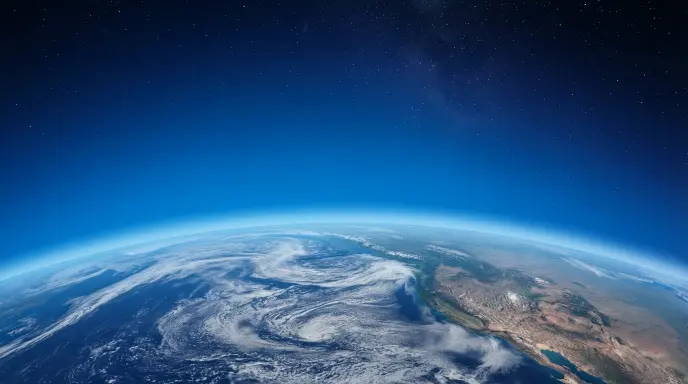
Firmament
Meaning: The firmament is the sky or heavens, especially when described in a literary or traditional way.
Explanation: It is one of the closest literary alternatives to “sky.” The word often appears in poetry, religious writing, and older literature.
Example: The stars seemed to shine brightly across the firmament.
Best Use: Use it in creative, poetic, historical, or literary writing.
Worst Use: Avoid it in everyday conversation because it can sound old-fashioned.
Tone: Literary and poetic.
Heavens
Meaning: “Heavens” can mean the sky, especially the sky viewed as a vast or beautiful space.
Explanation: It is closely related to “sky,” but it can also have a religious meaning.
Example: The colorful clouds stretched across the heavens.
Best Use: Use it in poetry, storytelling, and descriptive writing.
Worst Use: Avoid it when you need precise scientific language.
Tone: Poetic, traditional, or sometimes religious.
Celestial Sphere
Meaning: A conceptual sphere surrounding Earth onto which celestial objects appear to be projected.
Explanation: This is not a simple everyday synonym for “sky.” It is a technical astronomy term describing an imaginary model used to understand the positions of stars and other objects.
Example: Astronomers use the celestial sphere to describe the apparent positions of stars.
Best Use: Astronomy and educational writing.
Worst Use: Do not replace “sky” with it in ordinary conversation.
Tone: Technical and academic.
Celestial Expanse
Meaning: A vast area associated with the heavens or space above Earth.
Explanation: This is a descriptive phrase rather than a perfect synonym. It emphasizes the vastness of the sky.
Example: The moon appeared against the dark celestial expanse.
Best Use: Creative and descriptive writing.
Worst Use: Avoid it when a simple word would communicate the idea more clearly.
Tone: Formal and poetic.
Vault of Heaven
Meaning: A traditional expression for the sky or heavens imagined as a curved covering over Earth.
Explanation: The phrase gives the sky a sense of shape and grandeur.
Example: Ancient stories described stars moving across the vault of heaven.
Best Use: Historical, literary, and poetic writing.
Worst Use: It may sound too dramatic in business or academic writing.
Tone: Literary and traditional.
Aerial Expanse
Meaning: A broad area of air or sky.
Explanation: “Aerial” relates to the air, while “expanse” emphasizes a wide, open area. It is a descriptive alternative rather than an exact synonym.
Example: The aircraft moved across the vast aerial expanse.
Best Use: Formal descriptive writing.
Worst Use: Avoid it in simple everyday sentences.
Tone: Formal and descriptive.
Upper Atmosphere
Meaning: The higher region of Earth’s atmosphere.
Explanation: This is narrower than “sky.” It refers to a specific scientific region rather than everything people see above them.
Example: Research aircraft collected data from the upper atmosphere.
Best Use: Science and environmental writing.
Worst Use: Do not use it when simply describing a blue sky.
Tone: Scientific and technical.
Heavenly Realm
Meaning: A heavenly or divine region above Earth.
Explanation: This phrase is more spiritual or imaginative than “sky.”
Example: The poem describes birds rising toward a heavenly realm.
Best Use: Poetry, mythology, and spiritual writing.
Worst Use: Avoid it in technical writing unless the religious meaning is intended.
Tone: Poetic and spiritual.
Semi-Formal and Neutral Alternatives
Atmosphere
Meaning: The layer of gases surrounding Earth.
Explanation: “Atmosphere” is related to the sky but is not an exact synonym. The sky is what we see above Earth, while the atmosphere is the physical layer of gases surrounding the planet.
Example: The atmosphere scatters sunlight and makes the daytime sky appear blue.
Best Use: Science, education, weather, and environmental writing.
Worst Use: Do not substitute it for “sky” when describing appearance alone.
Tone: Neutral to scientific.
Expanse
Meaning: A large, open area or wide stretch of space.
Explanation: “Expanse” can describe the sky because it emphasizes its openness and vastness.
Example: Dark clouds covered the entire expanse above the town.
Best Use: Descriptive writing.
Worst Use: It is too general when the reader needs a direct reference to the sky.
Tone: Neutral and descriptive.
Open Sky
Meaning: The unobstructed sky above an area.
Explanation: This phrase emphasizes openness rather than simply referring to the sky.
Example: We spent the afternoon walking beneath the open sky.
Best Use: Travel writing, outdoor descriptions, and everyday language.
Worst Use: Avoid it when you need a technical term.
Tone: Natural and neutral.
Open Air
Meaning: An outdoor environment rather than an enclosed space.
Explanation: “Open air” is not an exact synonym for “sky.” It usually refers to being outdoors.
Example: The students enjoyed eating lunch in the open air.
Best Use: Everyday and descriptive writing.
Worst Use: Do not use it when you specifically mean the visible sky.
Tone: Casual and natural.
Overhead
Meaning: Directly above someone or something.
Explanation: “Overhead” can refer to the area of sky above you, but it does not mean the entire sky.
Example: A flock of birds flew overhead.
Best Use: Short, natural descriptions.
Worst Use: Avoid it when discussing the whole sky.
Tone: Neutral.
Above
Meaning: In or to a higher position.
Explanation: “Above” can replace “sky” only in certain sentence structures. It refers to location rather than the sky itself.
Example: The stars above looked incredibly bright.
Best Use: Descriptive writing and everyday speech.
Worst Use: Do not treat “above” as a direct noun synonym for sky.
Tone: Neutral.
The Blue
Meaning: A poetic or informal way to refer to the blue sky.
Explanation: This expression focuses on the sky’s color rather than the sky as a whole.
Example: The birds disappeared into the blue.
Best Use: Creative writing and captions.
Worst Use: Avoid it in scientific or formal documents.
Tone: Poetic and informal.
Blue Yonder
Meaning: A distant, open area of blue sky.
Explanation: “Blue yonder” is an idiomatic expression often connected with distance, freedom, or the open sky.
Example: The pilot dreamed of exploring the blue yonder.
Best Use: Creative, conversational, or playful writing.
Worst Use: Avoid it in academic or technical writing.
Tone: Casual and imaginative.
Airspace
Meaning: The portion of the atmosphere over a particular area that is subject to aviation rules or control.
Explanation: Airspace is not a direct synonym for sky. It refers to a defined area used in aviation and regulation.
Example: The aircraft entered controlled airspace.
Best Use: Aviation, transportation, and legal or regulatory contexts.
Worst Use: Do not use it simply to describe a beautiful sky.
Tone: Technical and professional.
Horizon
Meaning: The apparent line where the Earth or land seems to meet the sky.
Explanation: The horizon is related to the sky but is not the sky itself.
Example: The sun disappeared below the horizon.
Best Use: Landscape descriptions, travel writing, and geography.
Worst Use: Do not replace “sky” with “horizon” when describing clouds or stars overhead.
Tone: Neutral and descriptive.
Informal and Casual Alternatives

The Blue
“The blue” can work as a short, creative way to describe the sky.
Example: The plane disappeared into the blue.
When it sounds natural: Casual storytelling, captions, and creative writing.
When to avoid it: Formal reports, academic papers, and technical documents.
Tone: Casual and poetic.
Blue Yonder
“Blue yonder” gives the sky a sense of distance and freedom.
Example: They dreamed of traveling into the blue yonder.
When it sounds natural: Informal conversation, storytelling, and playful writing.
When to avoid it: Professional and scientific contexts.
Tone: Informal and imaginative.
Up Above
“Up above” refers to the area or space higher than the speaker.
Example: Look at those clouds up above.
When it sounds natural: Everyday speech and casual writing.
When to avoid it: Formal documents where precise wording is needed.
Tone: Friendly and conversational.
The Open Sky
“The open sky” is a natural phrase for an unobstructed view above.
Example: The children enjoyed playing under the open sky.
When it sounds natural: Everyday conversation, travel writing, and outdoor descriptions.
When to avoid it: Technical contexts.
Tone: Neutral and casual.
Up There
“Up there” is a very informal expression for a location above.
Example: There is a bright star up there.
When it sounds natural: Casual conversation.
When to avoid it: Formal writing or situations requiring precision.
Tone: Very casual.
True Synonyms vs Contextual Alternatives
Not every word connected with “sky” can replace it directly. Understanding the difference helps you avoid awkward or inaccurate sentences.
| Type | What It Means | Can It Replace the Original? |
|---|---|---|
| True synonym | A word with nearly the same core meaning | Sometimes |
| Near synonym | A word with a closely related meaning | Depends on context |
| Contextual alternative | A related expression used in a particular situation | Only in certain sentences |
| Broader expression | A term covering a wider idea | Sometimes |
| Narrower expression | A term referring to one part or aspect | Only when that specific meaning is intended |
For example, firmament can often replace “sky” in literary writing. Atmosphere cannot always replace it because the atmosphere is the physical layer of gases surrounding Earth. Similarly, horizon refers to a visual boundary rather than the whole sky.
Industry-Specific Usage
Business Writing
Business writing usually benefits from clear and direct language. The word sky itself is often better than an unusual synonym unless the document is descriptive.
For example:
The aircraft appeared against a clear sky.
If the subject is aviation, airspace may be more accurate:
The aircraft entered restricted airspace.
The key is precision. A sophisticated-sounding alternative is not automatically a better choice.
Corporate Communication
Corporate documents rarely need poetic alternatives for “sky.” Use straightforward wording when discussing weather, outdoor events, travel, or aviation.
For example:
The event will take place under an open sky.
For an aviation-related announcement:
The flight will remain within designated airspace.
These phrases communicate more clearly than literary terms such as “firmament.”
Academic Writing
Academic writing should favor precise terminology.
Choose atmosphere when discussing Earth’s gases:
Solar radiation interacts with Earth’s atmosphere.
Use celestial sphere when discussing an astronomy model:
The celestial sphere provides a useful framework for describing the apparent positions of stars.
Select sky when the discussion is about the visible appearance above Earth.
Creative Writing
Creative writing gives you more freedom. Words such as firmament, heavens, celestial expanse, and vault of heaven can create a stronger mood.
For example:
A silver moon hung quietly across the firmament.
The best choice depends on the mood. “Sky” feels simple and direct, while “firmament” sounds more dramatic and literary.
Weather and Science
In scientific writing, atmosphere is often more precise than “sky.”
For example:
The atmosphere contains several layers with different characteristics.
If you are describing what people see, however, “sky” remains appropriate:
The sky became cloudy before the storm.
Aviation
Aviation uses specialized terms such as airspace.
For example:
The aircraft entered controlled airspace.
Calling controlled airspace simply “sky” would remove important technical meaning.
Email Communication
Professional emails usually benefit from simple wording. Avoid unusual synonyms unless they add meaning.
For example:
The clear sky made conditions ideal for the outdoor event.
This is usually better than:
The celestial expanse made conditions ideal for the outdoor event.
The first sentence is clearer and more natural for professional communication.
Email Examples Using Alternatives to Sky
Email Example for a School Project
Subject: Astronomy Project Update
Dear Ms. Carter,
I have completed the section of my project about the celestial sphere. I explained how astronomers use this model to describe the apparent positions of stars in the sky.
Best,
Alex
Email Example for a Travel Update
Subject: Outdoor Event Plans
Hi Jordan,
The weather forecast looks clear, so we should be able to hold the event under the open sky as planned.
Best,
Maya
Email Example for a Professional Message
Subject: Flight Information
Hello David,
The flight route has been updated, and the aircraft will remain within the designated airspace throughout the journey.
Best regards,
Emma
Email Example for an Academic Discussion
Subject: Atmosphere Research
Dear Professor Lee,
I found several useful points for our assignment about Earth’s atmosphere. I will include information about how atmospheric conditions affect the appearance of the daytime sky.
Regards,
Noah
Email Example for a Creative Project
Subject: Poetry Draft
Hi Sam,
I revised the poem and replaced a few repeated references to the sky with “firmament” and “heavens.” These choices give the poem a more traditional tone.
Best,
Olivia
Short Dialogue Examples
Workplace Conversation
Person A: Should we hold the meeting outside?
Person B: Only if the weather stays clear. I would rather not risk rain.
Classroom Conversation
Person A: What does “firmament” mean?
Person B: It is a literary or traditional word for the sky or heavens.
Customer Service Conversation
Person A: Why was the flight delayed?
Person B: The aircraft had to wait because of conditions in the airspace.
Casual Conversation
Person A: Look up at the sky!
Person B: Wow! The stars are so bright tonight.
Professional Discussion
Person A: Should we say “sky” in the report?
Person B: Yes, unless we are discussing the physical gases around Earth. In that case, “atmosphere” is more precise.
How to Replace “Sky” in a Sentence
Original and Alternative Examples
Original: The stars filled the sky.
Alternative: The stars filled the heavens.
Why it works: “Heavens” gives the sentence a more poetic tone.
Original: The clouds covered the sky.
Alternative: The clouds covered the entire expanse above us.
Why it works: “Expanse” emphasizes the wide area rather than directly naming the sky.
Original: The plane entered the sky.
Alternative: The plane entered the airspace.
Why it works: “Airspace” is more appropriate when discussing aviation.
Original: The stars appeared in the sky.
Alternative: The stars appeared overhead.
Why it works: “Overhead” creates a shorter and more conversational sentence.
Original: The blue sky was beautiful.
Alternative: The blue yonder was beautiful.
Why it works: This is more imaginative but also more informal.
Original: The rocket moved through the sky.
Alternative: The rocket moved through the atmosphere.
Why it works: “Atmosphere” can be more precise when discussing a physical region surrounding Earth.
Original: The moon rose in the sky.
Alternative: The moon rose above the horizon.
Why it works: The alternative changes the focus from the sky to the moon’s position relative to the horizon.
Original: Birds flew across the sky.
Alternative: Birds flew across the open sky.
Why it works: “Open sky” highlights the unobstructed space.
Comparison of Sky Synonyms
| Phrase | Tone | Meaning / Scope | Best Use | Example |
|---|---|---|---|---|
| Sky | Neutral | Visible space above Earth | General writing | The sky is clear. |
| Heavens | Poetic | Sky or celestial realm | Literature | Stars filled the heavens. |
| Firmament | Literary | Sky or heavens | Poetry | Clouds crossed the firmament. |
| Atmosphere | Scientific | Gaseous layer around Earth | Science | The atmosphere contains gases. |
| Expanse | Descriptive | Wide open area | Creative writing | The expanse seemed endless. |
| Airspace | Technical | Controlled or defined aerial area | Aviation | The aircraft entered airspace. |
| Horizon | Neutral | Apparent boundary between land/sea and sky | Geography | The sun sank below the horizon. |
| Open sky | Neutral | Unobstructed sky | Outdoor descriptions | We ate under the open sky. |
| Blue yonder | Casual | Distant open sky | Informal writing | They dreamed of the blue yonder. |
| Celestial sphere | Technical | Astronomical model | Astronomy | Stars are mapped on the celestial sphere. |
| Overhead | Neutral | Area directly above | Everyday speech | Clouds gathered overhead. |
| Vault of heaven | Literary | Sky imagined as a curved covering | Poetry/history | Stars crossed the vault of heaven. |
Which Alternative Should You Choose?
Formal Writing
Choose heavens, firmament, celestial expanse, or vault of heaven when a literary or elevated style is appropriate.
Business Communication
Usually choose sky or open sky. Avoid complicated alternatives unless they add specific meaning.
Academic Writing
Choose atmosphere for scientific discussions and celestial sphere for astronomy. Use “sky” when discussing its visible appearance.
Legal Writing
Use precise terms such as airspace when referring to aviation or regulated areas. Do not substitute poetic expressions for technical terminology.
Professional Email
Use sky, atmosphere, or airspace, depending on the subject. Clear language is usually better than decorative wording.
Everyday Conversation
Sky, above, overhead, and up above are natural choices.
Casual Messages
The blue, blue yonder, and up there can work when the message has a relaxed or playful tone.
Grammar and Usage Guide

Sky vs Skies
Sky is normally singular:
The sky is cloudy.
Skies is also possible, especially in descriptive or literary language:
Stormy skies covered the region.
The plural often emphasizes different conditions, locations, or a dramatic visual scene.
The Sky vs Sky
In ordinary sentences, the sky is the most common form:
The birds are flying across the sky.
However, “sky” can appear without “the” in some expressions:
The plane disappeared into sky-blue clouds.
Here, “sky-blue” is functioning as a compound adjective.
Common Prepositions with Sky
Natural combinations include:
- in the sky
- across the sky
- through the sky
- above the sky
- under the sky
- beneath the sky
- into the sky
For example:
The fireworks burst across the sky.
Singular and Plural Usage
Use sky when referring to the general space above Earth:
The sky looked clear.
Use skies when the sentence calls attention to changing or varied conditions:
Clear skies are expected tomorrow.
Natural Word Combinations
Common collocations include:
- blue sky
- clear sky
- cloudy sky
- dark sky
- night sky
- open sky
- evening sky
- morning sky
- starry sky
- stormy skies
These combinations often sound more natural than forcing an unusual synonym.
Common Mistakes to Avoid
Treating Every Alternative as an Exact Synonym
“Atmosphere,” “horizon,” and “airspace” are related to the sky but do not have exactly the same meaning.
Using the Wrong Tone
“Firmament” may sound poetic in a scientific report. Choose language that matches the setting.
Changing the Intended Meaning
Replacing “sky” with “horizon” changes the meaning because the horizon is a boundary, not the whole sky.
Using Overly Formal Language
A simple sentence does not need an elaborate synonym. “The sky is clear” is often better than a complicated literary version.
Using Casual Language in Professional Writing
Expressions such as “up there” may sound too informal in a report or formal email.
Repeating the Same Word
Creative writing can become dull if “sky” appears in every sentence. Carefully chosen alternatives can add variety.
Ignoring Scientific Meaning
Use atmosphere when you mean Earth’s gaseous layer. Do not assume it always means “sky.”
Using Vague Wording
Words such as “above” can be less precise than “sky.” Make sure the replacement still tells the reader exactly what you mean.
When Not to Use “Sky”
When You Need Scientific Precision
Use atmosphere when discussing Earth’s gaseous envelope.
When Describing Aviation
Use airspace when discussing designated or controlled areas used by aircraft.
When Referring to the Horizon
Use horizon if you mean the apparent boundary between the sky and the Earth’s surface.
When Writing Poetry or Creative Descriptions
“Sky” is perfectly acceptable, but alternatives such as firmament or heavens may create a stronger mood when appropriate.
When a More Specific Term Is Better
If you mean the nighttime sky, say night sky. If you mean the area directly above someone, overhead may be clearer.
Advanced Writer Tips
Tone Control
Use sky for a plain, neutral tone. Choose firmament or heavens for a poetic tone. Select atmosphere or airspace for technical contexts.
Professional Email Etiquette
Keep professional messages simple. A precise word usually sounds more polished than an unusual synonym.
Politeness
The word “sky” itself does not usually affect politeness. The surrounding sentence matters more. Focus on clear and respectful wording.
Context Alignment
Think about your audience before choosing an alternative. A child, scientist, customer, and poet may all describe the same scene differently.
Precision
Ask what you actually mean. Are you describing the visible sky, Earth’s atmosphere, an aviation zone, the horizon, or a poetic image? The answer determines the best word.
Readability
Do not replace a familiar word merely to sound sophisticated. Strong writing is clear first.
Related Questions
What Is Another Way to Say Sky?
Common alternatives include heavens, firmament, atmosphere, expanse, open sky, and overhead. The best option depends on whether you want a neutral, technical, or poetic tone.
What Is a Professional Alternative to Sky?
In professional writing, sky is often already the best choice. In technical contexts, atmosphere or airspace may be more precise.
What Is a Formal Alternative to Sky?
Firmament, heavens, celestial expanse, and vault of heaven can provide a more formal or literary tone. They are not always interchangeable with “sky.”
What Can I Use Instead of Sky?
You can use heavens, firmament, expanse, open sky, overhead, or the blue, depending on your sentence.
Is Sky a Formal Word?
Yes. “Sky” is a standard neutral English word. It works in casual conversation, professional writing, education, and creative writing.
Is Firmament the Same as Sky?
“Firmament” can mean sky or heavens, but it has a literary, traditional, or poetic tone. It is not always the most natural replacement for “sky.”
What Is the Difference Between Sky and Atmosphere?
The sky is the visible space above Earth, while the atmosphere is the physical layer of gases surrounding Earth. They are related but not identical.
FAQs:
What is the most common synonym for sky?
Heavens is one of the closest common alternatives, especially in literary writing. In everyday English, however, “sky” is usually the most natural choice.
What is a formal synonym for sky?
Firmament is a formal or literary alternative. Celestial expanse and vault of heaven can also work in elevated descriptive writing.
What is a poetic synonym for sky?
Heavens, firmament, celestial expanse, and vault of heaven are poetic choices. They can make descriptions feel more dramatic or imaginative.
Is firmament another word for sky?
Yes, “firmament” can refer to the sky or heavens. However, it is more literary and traditional than the everyday word “sky.”
Can atmosphere replace sky?
Only in certain contexts. “Atmosphere” refers to Earth’s gaseous envelope, so it is more precise in scientific contexts but does not always mean the visible sky.
What is the difference between sky and heavens?
“Sky” usually refers to the visible space above Earth. “Heavens” can mean the sky in poetic language and may also carry religious or spiritual meanings.
What is another word for the blue sky?
Depending on the context, you can say the blue, blue yonder, open sky, or simply blue skies. These expressions have different levels of informality and imagery.
Key Takeaways
- Sky is a neutral and widely useful word that works in most everyday contexts.
- Firmament and heavens are better suited to poetic, literary, or traditional writing.
- Atmosphere is more precise when discussing Earth’s layer of gases.
- Airspace is a technical term for a defined area used in aviation and should not be treated as a direct synonym.
- Choose an alternative based on meaning, audience, tone, and context, not simply to make your writing sound more sophisticated.
Conclusion:
The word sky is simple, flexible, and appropriate in almost every type of general writing. Still, choosing a more specific or expressive alternative can make your sentence clearer or more vivid.
Heavens and firmament work well in poetic and literary contexts, while atmosphere is better for scientific writing. In aviation, airspace provides the precision that “sky” cannot. Expressions such as open sky, overhead, blue yonder, and the blue can add a more conversational or descriptive feel.
The key is not to treat all 32+ alternatives as interchangeable. Some describe the sky itself, while others describe a related idea, such as the atmosphere, horizon, or airspace.
Before replacing “sky,” consider what you actually mean and who will read your sentence. The strongest synonym is always the one that preserves your meaning while fitting the tone naturally.
